×
ToyotaParts- Hello
- Login or Register
- Quick Links
- Live Chat
- Track Order
- Parts Availability
- RMA
- Help Center
- Contact Us
- Shop for
- Toyota Parts
- Scion Parts
My Garage
My Account
Cart
OEM 2001 Toyota Echo Wheel Bearing
Hub Bearing- Select Vehicle by Model
- Select Vehicle by VIN
Select Vehicle by Model
orMake
Model
Year
Select Vehicle by VIN
For the most accurate results, select vehicle by your VIN (Vehicle Identification Number).
4 Wheel Bearings found
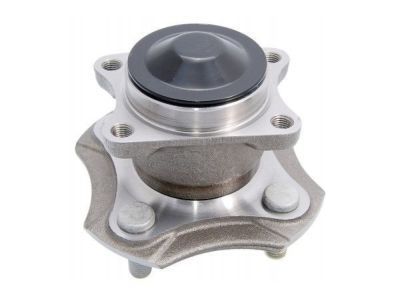
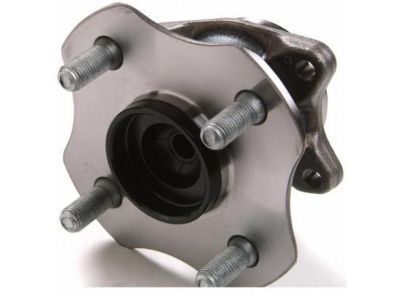
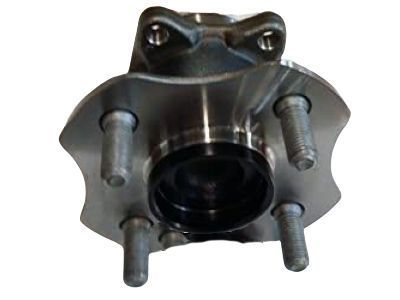
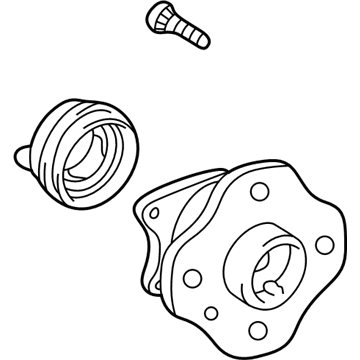
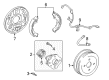
2001 Toyota Echo Hub Assembly
Part Number: 42410-52021$226.46 MSRP: $323.34You Save: $96.88 (30%)Ships in 1-3 Business DaysProduct Specifications- Other Name: Hub&Bearing Assembly; Rear Wheel Bearing & Hub; Wheel Hub Repair Kit; Axle Bearing; Hub & Bearing Assembly; Rear Axle, Passenger & Driver Side; Wheel Bearing and Hub Assembly.
- Replaces: 42410-52020
- Item Weight: 5.80 Pounds
- Item Dimensions: 6.8 x 6.8 x 4.5 inches
- Condition: New
- Fitment Type: Direct Replacement
- SKU: 42410-52021
- Warranty: This genuine part is guaranteed by Toyota's factory warranty.
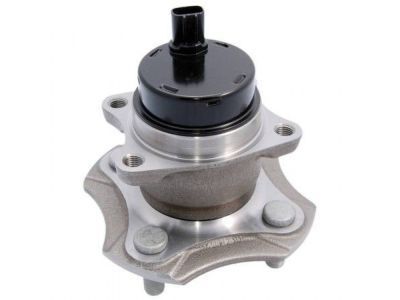
2001 Toyota Echo Hub Assembly, Rear
Part Number: 42450-52021$393.61 MSRP: $576.83You Save: $183.22 (32%)Ships in 1-3 Business DaysProduct Specifications- Other Name: Hub&Bearing Assembly, Rear Axle; Wheel Bearing & Hub Assembly; Wheel Hub Repair Kit; Axle Bearing.; Hub & Bearing Assembly, Rear Axle, Passenger & Driver Side; Wheel Bearing and Hub Assembly.
- Manufacturer Note: W(ABS)
- Position: Rear
- Replaces: 42450-52020
- Item Weight: 5.90 Pounds
- Item Dimensions: 6.7 x 6.7 x 6.4 inches
- Condition: New
- Fitment Type: Direct Replacement
- SKU: 42450-52021
- Warranty: This genuine part is guaranteed by Toyota's factory warranty.
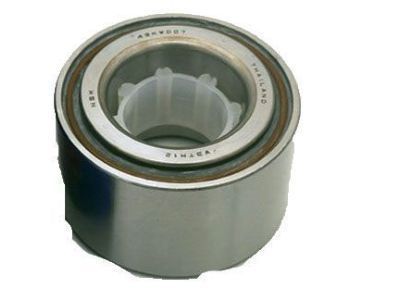
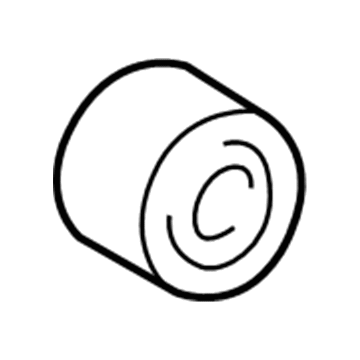
2001 Toyota Echo Front Wheel Bearing
Part Number: 90369-38021$115.64 MSRP: $162.33You Save: $46.69 (29%)Ships in 1-2 Business DaysProduct Specifications- Other Name: Bearing; Wheel Bearing, Front; Wheel Bearing Kit; Axle Bearing; Bearing (For Front Axle Hub Passenger Side); Bearing (For Front Axle Hub Driver Side); Wheel Bearing
- Replaces: 90369-38022, 90080-36108
- Item Weight: 1.40 Pounds
- Item Dimensions: 3.5 x 3.6 x 2.0 inches
- Condition: New
- Fitment Type: Direct Replacement
- SKU: 90369-38021
- Warranty: This genuine part is guaranteed by Toyota's factory warranty.
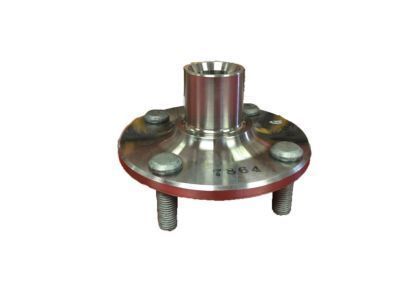
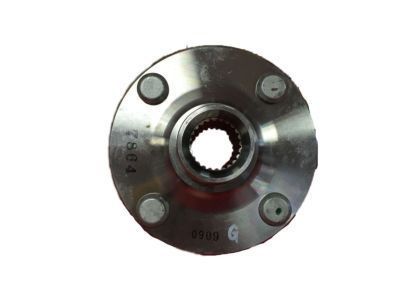
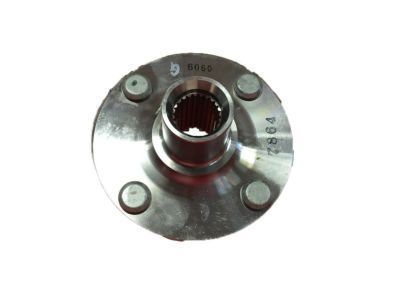
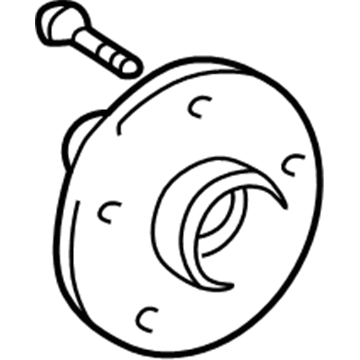
2001 Toyota Echo Front Hub
Part Number: 43502-52010$126.07 MSRP: $178.46You Save: $52.39 (30%)Ships in 1-2 Business DaysProduct Specifications- Other Name: Hub Sub-Assembly, Front Axle; Wheel Hub, Front; Wheel Hub Repair Kit; Hub Repair Kit; Hub; Hub Sub-Assembly, Front Axle, Passenger Side; Hub Sub-Assembly, Front Axle, Driver Side; Wheel Hub
- Position: Front
- Item Weight: 3.30 Pounds
- Item Dimensions: 6.3 x 6.2 x 4.5 inches
- Condition: New
- Fitment Type: Direct Replacement
- SKU: 43502-52010
- Warranty: This genuine part is guaranteed by Toyota's factory warranty.
2001 Toyota Echo Wheel Bearing
Looking for affordable OEM 2001 Toyota Echo Wheel Bearing? Explore our comprehensive catalogue of genuine 2001 Toyota Echo Wheel Bearing. All our parts are covered by the manufacturer's warranty. Plus, our straightforward return policy and speedy delivery service ensure an unparalleled shopping experience. We look forward to your visit!
2001 Toyota Echo Wheel Bearing Parts Q&A
- Q: How to Service and Repair a Wheel Bearing on 2001 Toyota Echo?A: Service and repair operations on wheel bearings should start with front wheel removal. You can check bearing backlash and axle hub deviation by taking out the 2 bolts, brake caliper, and disc while securely supporting the brake caliper. A dial indicator measurement near the hub center must show axle backlash under 0.05 mm (0.0020 inch); otherwise replace the bearing. The surface of the axle hub outside the hub bolt requires testing for deviation next while maintaining a measurement below 0.05 mm (0.0020 inch). Replacing the axle hub becomes necessary if this threshold is exceeded. Installation process requires substitution of the disc and brake caliper and 2 bolts while torque tightening them to 88 Nm (900 kgf-cm, 65 ft. lbs.). The drive shaft lock nut requires Special Service Tool: 09930-00010 with a hammer to unstake it before removing the lock nut with the brakes applied. Maintain support of the brake caliper at the same time you take out the 2 bolts and brake caliper and supporting disc. The ABS speed sensor should be disconnected during this step by removing its bolt on equipped vehicles. To disconnect the steering knuckle from the lower suspension arm remove the clip along with the nut before using Special Service Tool: 09628-00011 (09628-00030, 09628-00040, 09628-00050) to complete the disconnection. Use Special Service Tool: 09628-62011 for disconnecting the tie rod end from the steering knuckle while removing the nut and cotter pin. Use a precautionary method to detach the steering knuckle with its axle hub from the shock absorber by eliminating the 2 nuts and bolts while being careful not to damage the boot and ABS speed sensor rotor. Install the steering knuckle along with the axle hub onto the shock absorber but protect the boot and ABS speed sensor rotor while doing so. Apply engine oil to the 2 nuts threads before installing them at the shock absorber lower end and torque them to 132 Nm (1,350 kgf-cm, 97 ft. lbs.). After placing the tie rod end onto the steering knuckle, install the nut followed by torquing it to 49 Nm (500 kgf-cm, 36 ft. lbs.). Subsequently, add a new cotter pin then tighten the nut up to a 60° angle if the holes for the pin are misaligned. The knuckle assembly must be connected to the lower suspension arm through the supplied nut which requires torquing to 98 Nm (1,000 kgf-cm, 72 ft. lbs.). New clips must also be fitted with additional nut torque to 60 degrees if hole alignment for clips is not possible. Install the ABS speed sensor by torquing it to 8.0 Nm (82 kgf-cm, 71 inch lbs.) when an ABS system is present. Reinstall the brake caliper together with disc and both bolts before torqueing them to 88 Nm (900 kgf-cm, 65 ft. lbs.). Next apply brake pressure during the installation of a new lock nut that requires torquing to 216 Nm (2,200 kgf-cm, 159 ft. lbs.) while using a chisel and hammer for staking the lock nut. Proceed by installing the front wheel and securing it using torque to 103 Nm (1,050 kgf-cm, 76 ft. lbs.). Depression of the brake pedal multiple times should be followed by alignment checks on the front wheels while ABS sensor signal verification is required for vehicles equipped with this system.
Related 2001 Toyota Echo Parts
 2001 Toyota Echo Backing Plate
 2001 Toyota Echo Brake Caliper
 2001 Toyota Echo Brake Caliper Piston
 2001 Toyota Echo Brake Drum
 2001 Toyota Echo Brake Line
 2001 Toyota Echo Brake Shoe Set
 2001 Toyota Echo Hydraulic Hose
 2001 Toyota Echo Parking Brake Shoe
 2001 Toyota Echo Spindle Nut
 2001 Toyota Echo Wheel Cylinder
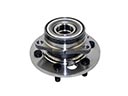 2001 Toyota Echo Wheel Hub
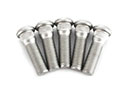 2001 Toyota Echo Wheel Stud