- Hello
- Login or Register
- Quick Links
- Live Chat
- Track Order
- Parts Availability
- RMA
- Help Center
- Contact Us
- Shop for
- Toyota Parts
- Scion Parts
Toyota VIN Decoder
Decode Your Toyota VIN
Enter your VIN below to confirm the details of your vehicle before browsing Toyota OEM parts.
* VINs do not use I, O, or Q.
What is a VIN?
A VIN (Vehicle Identification Number) is a unique 17-character code used to identify a vehicle and its available specifications.
Where can I find my VIN?
Your VIN is usually located in several places on your vehicle or documents.
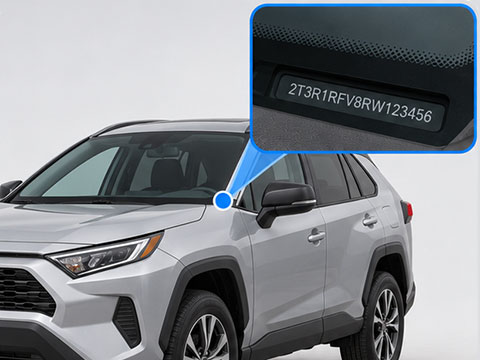
Driver-Side Dashboard
Look through the windshield near the lower driver-side corner.
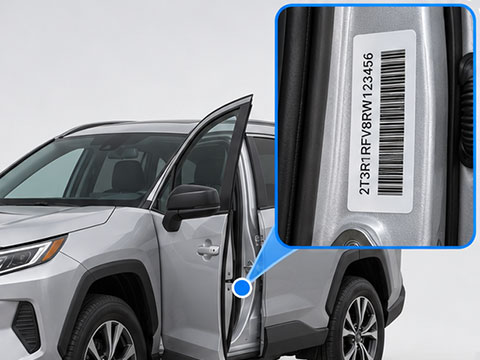
Driver-Side Door Jamb
Open the driver-side door and check the label near the latch area.
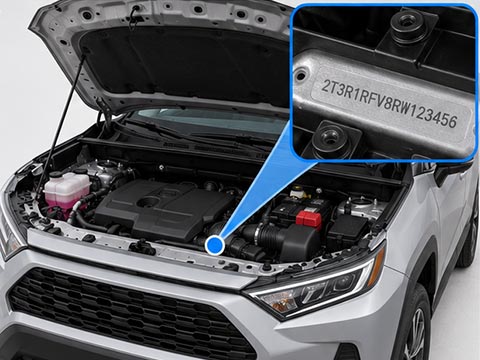
Under the Hood/Frame
The VIN may be stamped on the engine block or the front frame rail on some older vehicles.
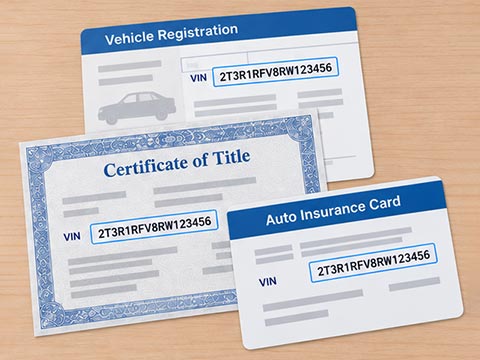
Registration, Title, or Insurance Card
Your VIN is usually listed on registration, title, or insurance documents.
What information can a VIN provide?

Vehicle Information
The production date, vehicle description, frame number, catalog code, and other identifying information may be available via the VIN.

Major Attribute
Details like the body type, model code, engine model, trim level, transmission, number of doors, and drivetrain may also be determined via the VIN.

Parts Matching
Decoded vehicle details can help narrow down compatible Toyota OEM parts before browsing the parts catalog.
Frequently Asked Questions
Is a VIN always 17 characters?
Yes, almost all modern vehicles built after the 1980s use the standardized 17-character VIN format. Older vehicles may have shorter or non-standard VINs, which are not supported by our Toyota VIN decoder.
Will VIN make my parts selection more accurate?
Yes. Your 17-character VIN helps identify your vehicle's exact factory configuration, including engine, transmission, and other options that may vary even within the same year, make, and model. Providing your VIN reduces guesswork and helps ensure you order the correct part the first time.
Does a Toyota VIN decoder show vehicle history?
No, the VIN decoder works by utilizing industry-standard definitions to identify the information encoded within the VIN itself by the original manufacturer at the factory. While vehicle history reports do typically ask for your VIN also, this is because the accident reports, title records, and ownership history they offer are stored using the VIN as an ID, but the information is external, not actually found within the VIN number itself.
Why is my Toyota VIN not accepted?
Make sure the VIN contains exactly 17 characters, does not include spaces or the letters I, O, or Q, and is assigned to a U.S.-market vehicle.