×
ToyotaParts- Hello
- Login or Register
- Quick Links
- Live Chat
- Track Order
- Parts Availability
- RMA
- Help Center
- Contact Us
- Shop for
- Toyota Parts
- Scion Parts
My Garage
My Account
Cart
OEM Toyota Matrix Rear Crossmember
Rear Suspension Crossmember- Select Vehicle by Model
- Select Vehicle by VIN
Select Vehicle by Model
orMake
Model
Year
Select Vehicle by VIN
For the most accurate results, select vehicle by your VIN (Vehicle Identification Number).
4 Rear Crossmembers found
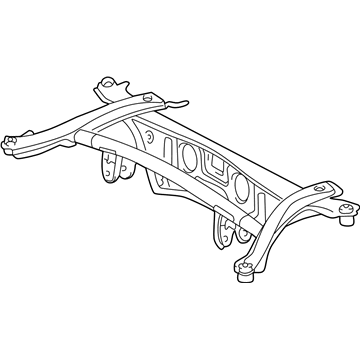
Toyota Matrix Suspension Crossmember, Rear Part Number: 51206-12190
$964.85 MSRP: $1414.00You Save: $449.15 (32%)Ships in 1-3 Business Days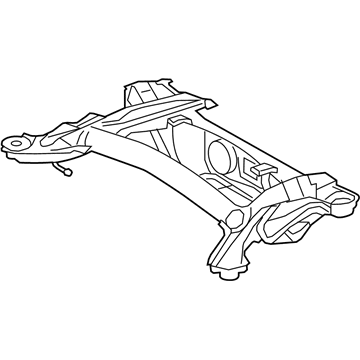
Toyota Matrix Suspension Crossmember, Rear Part Number: 51206-12152
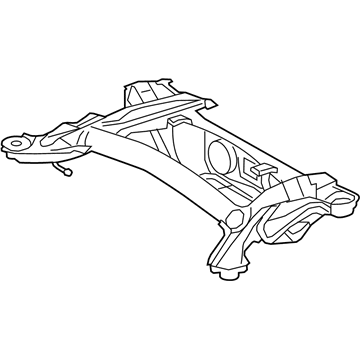
Toyota Matrix Suspension Crossmember, Rear Part Number: 51206-12142
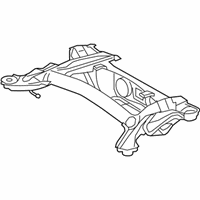
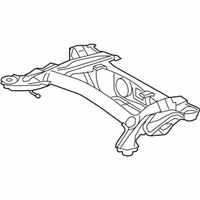
Toyota Matrix Suspension Crossmember, Rear Part Number: 51206-12150
Toyota Matrix Rear Crossmember
Choose genuine Rear Crossmember that pass strict quality control tests. You can trust the top quality and lasting durability. Shopping for OEM Rear Crossmember for your Toyota Matrix? Our website is your one-stop destination. We stock an extensive selection of genuine Toyota Matrix parts. The price is affordable so you can save more. It only takes minutes to browse and find the exact fit. Easily add to cart and check out fast. Our hassle-free return policy will keep you stress-free. We process orders quickly for swift delivery. Your parts will arrive faster, so you can get back on the road sooner.
Toyota Matrix Rear Crossmember Parts and Q&A
- Q:How to remove the rear crossmember on Toyota Matrix?A:The first step to remove the rear cross-member requires removal of the rear wheels. The 2WD requires removal of its center Exhaust Pipe assembly and the 4WD needs the same procedure. Move on to discharge the differential oil after separating the propeller with center bearing shaft assembly which operates in 4WD systems. The nuts securing the rear Axle Shafts need to be removed from both the left and right sides of the 4WD system but only the charcoal canister assembly must be taken out when dealing with 2WD vehicles. Work on the dual calibration assemblies of the rear wheel disc brakes along with their respective discs before moving onto the next steps. Both 2WD and 4WD systems require the disconnection and separation of rear speed sensor wires from each side respectively. Proceed to remove the parking brake shoe return tension springs, hold down compression springs along with all other components from both the left and right sides. The maintenance task includes separating parking brake cable assemblies from rear stabilizer link assemblies both on left and right sides. Secondly separate the upper Control Arm assemblies along with the rear suspension arm assemblies from both sides of the vehicle. The removal of the rear axle assemblies must occur on both sides in 2WD models while handling 4WD requires the same actions. There is a need to take out rear Drive Shaft assemblies and their snap rings during 4WD maintenance. Begin by taking out the rear floor side member brace followed by loose connection of rear shock absorbers equipped with coil springs on each side before finishing by removing the rear No. 1 suspension arm assemblies. Secure the rear suspension member by using a jack with wooden block. Afterwards remove all bolts and nuts before slowly lowering the member. The procedure to lower the rear suspension member for 4WD includes wire harness connector and hose removal followed by clamp disengage then member suspension support and subsequent removal of bolts and nuts. The final parts to remove include the upper control arm assemblies together with the rear No. 1 stabilizer bar bracket, the rear stabilizer bushing, the rear stabilizer bar and the No. 6 exhaust pipe support bracket as well as the rear differential carrier assembly, rear No. 1 differential mount cushion and the stud bolts.
- Q:How to install a rear crossmember on Toyota Matrix?A:The installation of the rear cross-member requires using a 17 Nm (175 kgf-cm, 13 ft-lbf) torque to put in the 2 stud bolts first. Start by mounting the rear No. 1 differential mount cushion (for 4WD) and then fit in the rear differential carrier assembly (for 4WD). The rear installation of the No. 6 Exhaust Pipe support bracket (for 4WD) requires two bolts at 22 Nm (224 kgf-cm, 16 ft-lbf). After completing the installation of the rear stabilizer bar you should add the rear stabilizer bushing along with the rear No. 1 stabilizer bar bracket. Raise the rear suspension member (for 2WD or 4WD) with a jack along with a wooden block before fixing it with 2 bolts along with 2 nuts at a torque of 105 Nm (1071 kgf-cm, 77 ft-lbf). The assembly requires engagement of the 6 clamps along with wire harness connector and hose connection. Securing both sides of the rear Shock Absorber with coil spring starts the installation process which includes stopping the nut from spinning while tightening the bolt before fully tightening the 3 bolts from 1 to 3 at a torque of 65 Nm (663 kgf-cm, 48 ft-lbf). Start by installing the rear floor side member brace and rear Drive Shaft snap rings along with assemblies (for 4WD) LH/then install the same components RH equally. Both 2WD and 4WD models require the rear axle assemblies LH and RH installation followed by temporary bolt tightening of the upper Control Arm assemblies LH and RH and the rear No. 1 suspension arm assemblies LH and RH. The process of assembly starts with installing the rear stabilizer link assembly LH and RH followed by installing the No. 3 Parking Brake Cable assembly which requires a bolt torque setting at 8.0 Nm (82 kgf-cm, 71 in-lbf) and two bolts that need to be tightened to 6.0 Nm (61 kgf-cm, 53 in-lbf). The process must avoid cable twisting. Repeating this method applies to installation of the No. 2 parking brake cable assembly. Use high-temperature grease on both sides for installation of parking brake shoe components which should follow the exact procedure for LH and RH sides. Set the parking brake system next install the rear Speed Sensor wire LH (for 2WD) followed by its bolt and nut while keeping the wire straight before repeating the same process for rear speed sensor wire RH (for 2WD). Continue by connecting rear speed sensor wires for both LH and RH sides (for 2WD) and install the rear Axle Shaft nut LH and RH (for 4WD) then temporarily and finally tighten the propeller center bearing assembly. 2WD owners must join rear speed sensor wires between both LH and RH sides while 4WD operators must securely torque the rear speed sensor LH and RH hardware. After installing the rear disc LH and RH you should proceed with installing the rear disc brake caliper assembly LH and RH respectively. Put on the rear axle shaft nut LH and RH while tightening the propeller with center bearing shaft assembly by using a sequence of temporary and final tightening (for 4WD). The installation of the charcoal canister assembly applies to 2WD vehicles but not 4WD while the adjustment of parking brake shoe clearance and lever travel applies to both 2WD and 4WD. Transfer oil inspection and adjustment happen only in 4WD vehicles and after completing these tasks you must install the center exhaust pipe assembly for all vehicles. Add differential oil to the differential (for 4WD) while installing the rear wheels at 103 Nm (1050 kgf-cm, 76 ft-lbf) torque. Then stabilize the suspension and fully tighten the rear No. 1 suspension arm assembly LH and RH and rear shock absorber with coil spring and upper control arm assembly for both sides. The last task includes a rear wheel alignment inspection and speed sensor signal checks under the ABS and VSC systems.
Related Toyota Matrix Parts
 Toyota Matrix Sway Bar Link
 Toyota Matrix Axle Beam Mount
 Toyota Matrix Axle Shaft
 Toyota Matrix Bump Stop
 Toyota Matrix Coil Spring Insulator
 Toyota Matrix Coil Springs
 Toyota Matrix Control Arm Bushing
 Toyota Matrix Crossmember Bushing
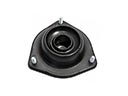 Toyota Matrix Strut Mounts
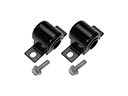 Toyota Matrix Sway Bar Bushing
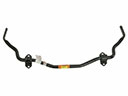 Toyota Matrix Sway Bars
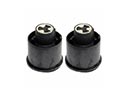 Toyota Matrix Trailing Arm Bushing