×
ToyotaParts- Hello
- Login or Register
- Quick Links
- Live Chat
- Track Order
- Parts Availability
- RMA
- Help Center
- Contact Us
- Shop for
- Toyota Parts
- Scion Parts
My Garage
My Account
Cart
OEM 2007 Toyota Sequoia Control Arm
Suspension Arm- Select Vehicle by Model
- Select Vehicle by VIN
Select Vehicle by Model
orMake
Model
Year
Select Vehicle by VIN
For the most accurate results, select vehicle by your VIN (Vehicle Identification Number).
4 Control Arms found
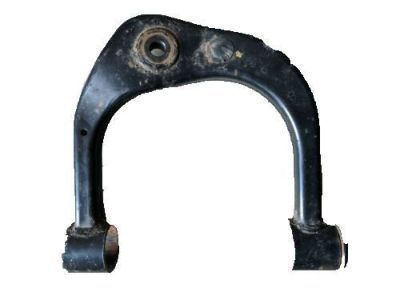
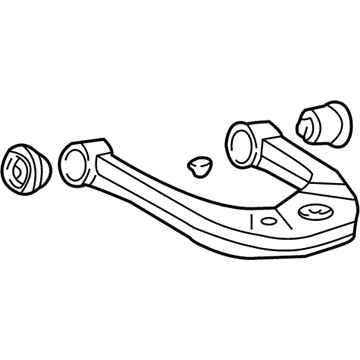
2007 Toyota Sequoia Upper Control Arm, Driver Side
Part Number: 48630-34010$218.78 MSRP: $312.36You Save: $93.58 (30%)Ships in 1-2 Business DaysProduct Specifications- Other Name: Arm Assembly, Suspension; Suspension Control Arm, Front Left Upper; Arm Assembly, Front Suspension, Upper Driver Side; Suspension Control Arm; Control Arm
- Position: Upper Driver Side
- Part Name Code: 48630
- Item Weight: 5.90 Pounds
- Item Dimensions: 16.1 x 3.5 x 12.9 inches
- Condition: New
- Fitment Type: Direct Replacement
- SKU: 48630-34010
- Warranty: This genuine part is guaranteed by Toyota's factory warranty.
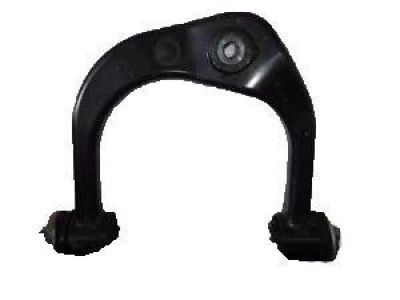
2007 Toyota Sequoia Upper Control Arm, Passenger Side
Part Number: 48610-34010$238.58 MSRP: $340.63You Save: $102.05 (30%)Ships in 1-2 Business DaysProduct Specifications- Other Name: Arm Assembly, Suspension; Suspension Control Arm, Front Right Upper; Arm Assembly, Front Suspension Upper, Passenger Side; Suspension Control Arm; Control Arm
- Position: Passenger Side
- Part Name Code: 48610
- Item Weight: 6.00 Pounds
- Item Dimensions: 16.1 x 3.6 x 12.7 inches
- Condition: New
- Fitment Type: Direct Replacement
- SKU: 48610-34010
- Warranty: This genuine part is guaranteed by Toyota's factory warranty.
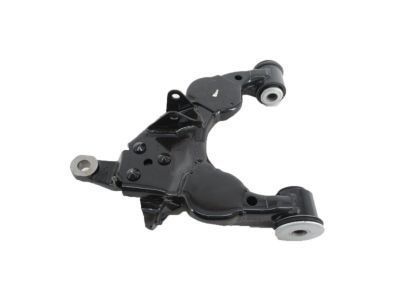
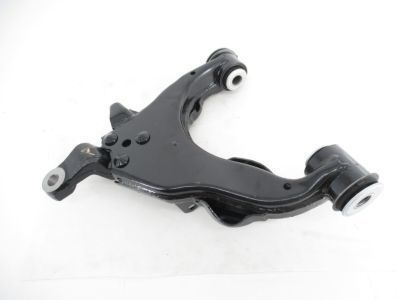
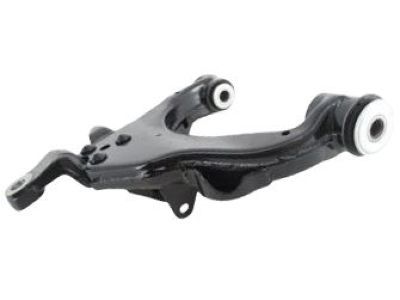
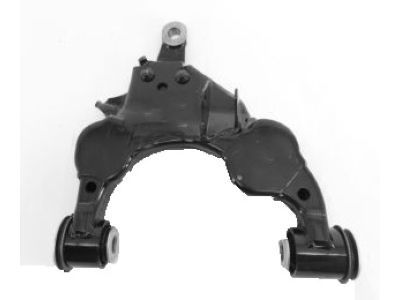
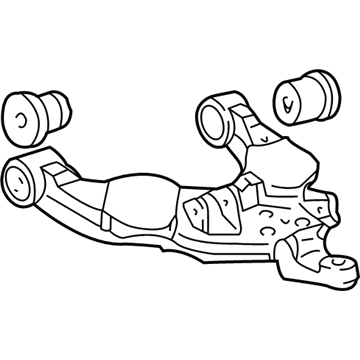
2007 Toyota Sequoia Lower Control Arm, Driver Side
Part Number: 48069-34040$233.28 MSRP: $333.07You Save: $99.79 (30%)Product Specifications- Other Name: Arm Sub-Assembly, Suspension; Suspension Control Arm, Front Left Lower; Arm Sub-Assembly, Front Suspension, Lower Driver Side; Suspension Control Arm; Control Arm
- Position: Lower Driver Side
- Part Name Code: 48069
- Item Weight: 21.00 Pounds
- Item Dimensions: 22.9 x 6.1 x 17.9 inches
- Condition: New
- Fitment Type: Direct Replacement
- SKU: 48069-34040
- Warranty: This genuine part is guaranteed by Toyota's factory warranty.
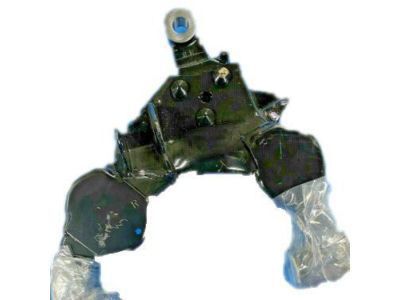
2007 Toyota Sequoia Lower Control Arm, Passenger Side
Part Number: 48068-34040$238.46 MSRP: $340.47You Save: $102.01 (30%)Product Specifications- Other Name: Arm Sub-Assembly, Suspension; Suspension Control Arm, Front Right Lower; Arm Sub-Assembly, Front Suspension, Lower Passenger Side; Suspension Control Arm; Control Arm
- Position: Passenger Side
- Part Name Code: 48068
- Item Weight: 21.00 Pounds
- Item Dimensions: 22.7 x 6.4 x 18.2 inches
- Condition: New
- Fitment Type: Direct Replacement
- SKU: 48068-34040
- Warranty: This genuine part is guaranteed by Toyota's factory warranty.
2007 Toyota Sequoia Control Arm
Looking for affordable OEM 2007 Toyota Sequoia Control Arm? Explore our comprehensive catalogue of genuine 2007 Toyota Sequoia Control Arm. All our parts are covered by the manufacturer's warranty. Plus, our straightforward return policy and speedy delivery service ensure an unparalleled shopping experience. We look forward to your visit!
2007 Toyota Sequoia Control Arm Parts Q&A
- Q: How to service and repair the front lower Control Arm on 2007 Toyota Sequoia?A: Service and repair of the front lower suspension arm starts with removing the front wheel then disconnecting the tie rod end by removing the cotter pin combined with nut before using Special Service Tool: 09610-20012 to separate it from the lower ball joint while repeating this step for the other side. The servicing process starts with removing bolts and nuts from the rack and pinion power steering gear set followed by disconnecting the front stabilizer link through the removal of the nut. A hexagon (6 mm) wrench should be used to hold the stud when the ball joint moves with the nut. Detach the front shock absorber through a process that involves lower side set nut and washer removal without affecting the bolt then proceeds with lower suspension arm prying down to remove the bolt and complete shock absorber detachment. To remove the front lower ball joint it is necessary to first remove the nut and cotter pin before using Special Service Tool: 09628-62011 to disconnect it from the lower suspension arm. Start replacement of the front suspension lower arm by adding marks on the front and rear cam plates along with the chassis frame then remove both cam plates and their bolts as well as lower arm using caution to prevent power steering gear tube damage. The replacement of front lower arm No. 1 bushing requires special tools including 09613-26010 and 09632-36010 and 09950-00020 and a press for removal after flange prying with a chisel and hammer. Installation of the new No. 1 bushing needs tools 09502-12010, 09631-12090, a press, and steel plate that must be positioned correctly. When installing the new front lower arm No. 2 bushing Special Service Tools 09631-12090 along with 09950-60020 (09951-00680) and press equipment with steel insert complete the task. Make sure the bushing faces the proper orientation. To install the front spring bumpers on the No. 1 and No. 2 positions on-vehicle start by removing the front wheel before swapping the No. 1 spring bumper with Special Service Tool: 09922-10010 while applying torque to 23 Nm (235 kgf-cm, 17 ft. lbs.). Then remove the stabilizer bar for No. 2 spring bumper replacement at the similar torque specification and reinstall the front wheel and stabilizer bar with torque of 110 Nm (1,150 kgf-cm, 83 ft. lbs.). The installation process begins with attaching the lower suspension arm to the 2 cams and bolts and cam plates during which the technician should gently move the power steering gear backward but must avoid damaging the power steering gear tubes while torquing the assembly to 130 Nm (1,325 kgf-cm, 96 ft. lbs.). The technician should synchronize the matchmarks found on both the cam plates and chassis frame. The installation requires connection of the lower ball joint and nut attachment then installation of a new cotter pin that must be tightened to 159 Nm while permitting increased torque when the pin holes misalign to 60 degrees. The front shock absorber assembly needs to be fastened with a torque force of 135 Nm (1,400 kgf-cm, 100 ft. lbs.), while the front stabilizer link assembly should be tightened to 69 Nm (700 kgf-cm, 51 ft. lbs.). Use a hexagon wrench (6 mm) to lock the ball joint when it turns with the nut. You must install the rack and pinion power steering gear assembly while torquing its bolts and nuts according to these specifications: A bolt requires 165 Nm (1700 kgf-cm, 122 ft. lbs.), B nut needs 130 Nm (1350 kgf-cm, 96 ft. lbs.) and C bolt and nut should reach 165 Nm (1700 kgf-cm, 122 ft. lbs.). Finish the installation by joining lower ball joints to RH and LH tie rod ends through their respective nuts which are equipped with new cotter pins then torque everything to 91 Nm (930 kgf-cm, 67 ft. lbs.) and continue torquing an additional 60 degrees for misaligned holes. The last step includes front wheel installation at 110 Nm (1,150 kgf-cm, 83 ft. lbs.) while checking wheel alignment and conducting steering angle and master cylinder pressure and yaw rate and deceleration sensor zero point calibrations.
Related 2007 Toyota Sequoia Parts
 2007 Toyota Sequoia Coil Springs
 2007 Toyota Sequoia Alignment Bolt
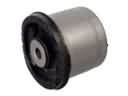 2007 Toyota Sequoia Axle Beam Mount
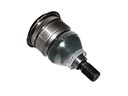 2007 Toyota Sequoia Ball Joint
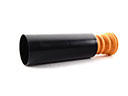 2007 Toyota Sequoia Bump Stop
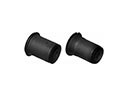 2007 Toyota Sequoia Control Arm Bushing
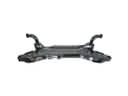 2007 Toyota Sequoia Front Cross-Member
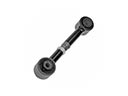 2007 Toyota Sequoia Lateral Link
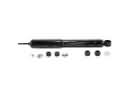 2007 Toyota Sequoia Shock Absorber
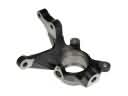 2007 Toyota Sequoia Steering Knuckle
 2007 Toyota Sequoia Sway Bar Bracket
 2007 Toyota Sequoia Sway Bar Link