×
ToyotaParts- Hello
- Login or Register
- Quick Links
- Live Chat
- Track Order
- Parts Availability
- RMA
- Help Center
- Contact Us
- Shop for
- Toyota Parts
- Scion Parts
My Garage
My Account
Cart
OEM Toyota Yaris Axle Shaft
Car Axle Shaft- Select Vehicle by Model
- Select Vehicle by VIN
Select Vehicle by Model
orMake
Model
Year
Select Vehicle by VIN
For the most accurate results, select vehicle by your VIN (Vehicle Identification Number).
12 Axle Shafts found
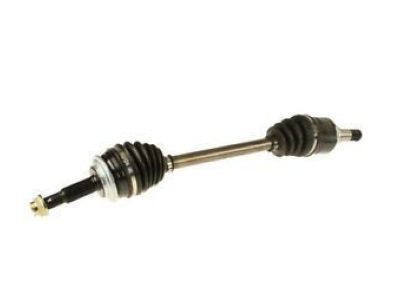
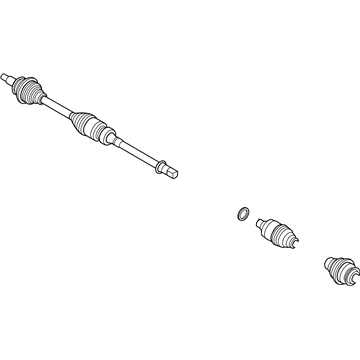
Toyota Yaris Axle Assembly, Passenger Side Part Number: 43410-WB006
$334.89 MSRP: $478.15You Save: $143.26 (30%)Ships in 1-3 Business DaysToyota Yaris Axle Assembly, Passenger Side Part Number: 43410-WB005
$360.19 MSRP: $527.87You Save: $167.68 (32%)Ships in 1-3 Business Days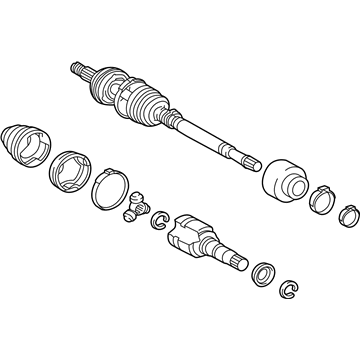
Toyota Yaris Axle Assembly, Passenger Side Part Number: 43410-0D520
$371.25 MSRP: $544.07You Save: $172.82 (32%)Ships in 1-3 Business Days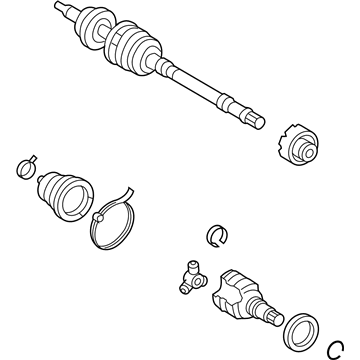
Toyota Yaris Axle Assembly, Driver Side Part Number: 43420-0D450
$368.18 MSRP: $539.58You Save: $171.40 (32%)Ships in 1-3 Business DaysToyota Yaris Axle Assembly, Driver Side Part Number: 43420-0D322
$370.46 MSRP: $542.93You Save: $172.47 (32%)Ships in 1-3 Business Days
Toyota Yaris Axle Assembly, Front Driver Side Part Number: 43420-52211
$391.11 MSRP: $573.18You Save: $182.07 (32%)Ships in 1-3 Business Days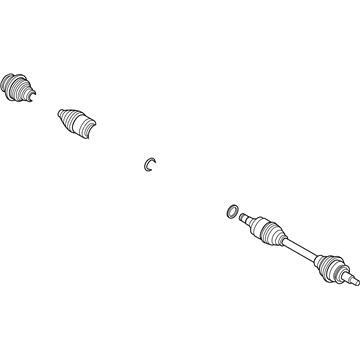
Toyota Yaris Axle Assembly, Driver Side Part Number: 43420-WB005
$387.65 MSRP: $568.09You Save: $180.44 (32%)Ships in 1-3 Business DaysToyota Yaris Axle Assembly, Front Passenger Side Part Number: 43410-52211
$440.48 MSRP: $645.53You Save: $205.05 (32%)Ships in 1-3 Business DaysToyota Yaris Axle Assembly, Passenger Side Part Number: 43410-0D470
$470.03 MSRP: $688.83You Save: $218.80 (32%)Ships in 1-3 Business DaysToyota Yaris Axle Assembly, Driver Side Part Number: 43420-WB006
$306.72 MSRP: $437.92You Save: $131.20 (30%)Ships in 1-3 Business DaysToyota Yaris Axle Assembly, Driver Side Part Number: 43420-0D480
$341.45 MSRP: $487.51You Save: $146.06 (30%)Toyota Yaris Axle Assembly, Passenger Side Part Number: 43410-0D471
Toyota Yaris Axle Shaft
Choose genuine Axle Shaft that pass strict quality control tests. You can trust the top quality and lasting durability. Shopping for OEM Axle Shaft for your Toyota Yaris? Our website is your one-stop destination. We stock an extensive selection of genuine Toyota Yaris parts. The price is affordable so you can save more. It only takes minutes to browse and find the exact fit. Easily add to cart and check out fast. Our hassle-free return policy will keep you stress-free. We process orders quickly for swift delivery. Your parts will arrive faster, so you can get back on the road sooner.
Toyota Yaris Axle Shaft Parts and Q&A
- Q:How to remove and replace the axle shaft assembly on Toyota Yaris?A:The axle shaft replacement requires starting by disconnecting the negative cable of the battery terminal. Automatic transaxle users should drain their fluid while manual transaxle operators should drain their transaxle oil. Service Tool 09930-00010 with a hammer releases the staked part by placing its flat surface upward during removal of the front wheel and front axle hub nut to protect the tool and drive shaft threads. To separate the front Speed Sensor with ABS you must first remove the bolt with flexible hose before removing the bolt of the steering knuckle while keeping the sensor clean of contamination at its standard installation position. The dust cover stays intact while using Special Service Tool: 09628-62011 to disconnect the tie rod end sub-assembly by removing its castle nut and cotter pin. A socket hexagon wrench 6 may help you remove the nut to disconnect the front stabilizer link assembly from the Shock Absorber. To separate the front lower suspension arm begin by removing its clip and castle nut before using Special Service Tool: 09628-00011 while suspending this tool with string to guard against lower ball joint dust cover damage. You can use a plastic hammer or a brass bar along with a hammer to loosen the drive shaft end before releasing the front axle from the vehicle while protecting both joint boot and speed sensor rotor. Constuctive Service Tools 09520-01010, 09520-24010 and 09520-32040 will assist in front drive shaft assembly LH removal after removing the 2 bolts from the automatic transmission case protector while protecting the oil seal and inboard joint boot. To detach the front drive shaft assembly RH employ both a screwdriver together with a hammer but maintain safety by preventing any damage to the components. Complete the front axle assembly installation process by using Special Service Tools: 09608-02021, 09608-16042, and 09608-02041 because exposing the hub bearing to the vehicle weight can result in damage.
- Q:How to install the axle shaft assembly and related components on Toyota Yaris?A:Synchronize the splines on the inboard joint by coating them with ATF or gear oil then drive it with a screwdriver and hammer to secure the drive shaft. The front drive inboard joint hole snap ring should face downward but you should avoid hurting the oil seal and inboard joint boot. Perceive a secure fit by verifying reaction force and sound level. The installation procedure for the RH side mirrors that of the LH side. Once the automatic transmission case protector without ABS is installed using two bolts at 23 Nm (235 kgf-cm, 17 ft-lbf), the front axle must be pushed out to align the spline correctly with the drive shaft. Perform this operation with necessary caution and inspect the Speed Sensor rotor for foreign matter. Note the clip holes of the lower suspension arm then install it onto the steering knuckle using a new castle nut torqued to 98 Nm (1,000 kgf-cm, 72 ft-lbf). After installation, place a new clip. The procedure requires use of a socket hexagon wrench 6 to stabilize the stud when installing the front stabilizer link while torquing the nut to 74 Nm (755 kgf-cm, 55 ft-lbf). The tie rod end should be installed onto the steering knuckle while using a new castle nut that is torqued to 49 Nm (500 kgf-cm, 36 ft-lbf) along with new clip hole alignment and installation of a new cotter pin. Mechanics should install the front speed sensor to the steering knuckle by torquing the bolt to 8.5 Nm (87 kgf-cm, 75 in-lbf). They must also confirm the sensor tip remains clean of foreign material and reinforces the original installation angle before fastening the flexible hose and speed sensor bolt with 29 Nm (300 kgf-cm, 22 ft-lbf) torque while avoiding hose twisting. A 30 mm socket wrench should be used to tighten the new axle hub nut to 216 Nm (2,203 kgf-cm, 160 ft-lbf). Seal the nut by striking a chisel with a hammer. Fasten the front wheel with 103 Nm (1,050 kgf-cm, 76 ft-lbf) torque before reattaching the cable to the negative battery terminal where a 5.4 Nm (55 kgf-cm, 48 in-lbf) torque connection must be made. Add automatic transaxle fluid to automatic transmission models along with manual transmission models requiring transaxle oil. Perform a leak inspection of the automatic transaxle fluid and manually check transaxle oil circulation followed by front wheel alignment steps and ABS sensor signal test for vehicles with ABS systems.
Related Toyota Yaris Parts
 Toyota Yaris CV Joint
 Toyota Yaris Coil Spring Insulator
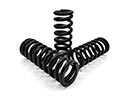 Toyota Yaris Coil Springs
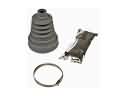 Toyota Yaris CV Boot
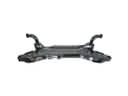 Toyota Yaris Front Cross-Member
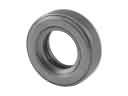 Toyota Yaris Strut Bearing
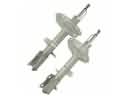 Toyota Yaris Strut Housing
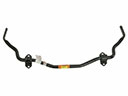 Toyota Yaris Sway Bars
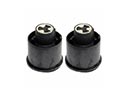 Toyota Yaris Trailing Arm Bushing
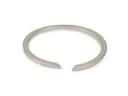 Toyota Yaris Transfer Case Output Shaft Snap Ring
 Toyota Yaris Transfer Case Seal
 Toyota Yaris Wheel Seal
Browse Toyota Yaris Axle Shaft by Years
2020
2019
2018
2017
2016
2015
2014
2013
2012
2011
2010
2009
2008
2007