×
ToyotaParts- Hello
- Login or Register
- Quick Links
- Live Chat
- Track Order
- Parts Availability
- RMA
- Help Center
- Contact Us
- Shop for
- Toyota Parts
- Scion Parts
My Garage
My Account
Cart
OEM 2010 Scion xD Crankshaft Seal
- Select Vehicle by Model
- Select Vehicle by VIN
Select Vehicle by Model
orMake
Model
Year
Select Vehicle by VIN
For the most accurate results, select vehicle by your VIN (Vehicle Identification Number).
2 Crankshaft Seals found
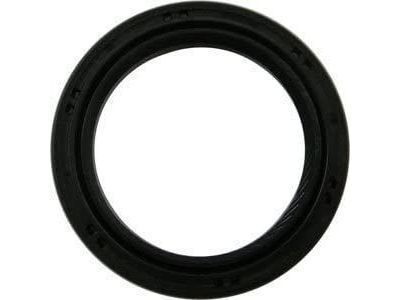

2010 Scion xD Oil Seal, Front
Part Number: 90080-31049$9.91 MSRP: $13.79You Save: $3.88 (29%)Ships in 1-3 Business DaysProduct Specifications- Other Name: Seal, Type T Oil; Engine Crankshaft Seal, Front; Timing Cover Gasket; Multi-Purpose Seal; Timing Cover Seal; Crankshaft Seal; Front Seal; Timing Cover Oil Seal; Cover Seal; Oil Seal for Timing Chain/Belt.
- Manufacturer Note: (L)
- Position: Front
- Replaces: 90311-38059, 90080-31060
- Part Name Code: 11302A
- Item Weight: 0.50 Pounds
- Item Dimensions: 2.2 x 2.2 x 0.5 inches
- Condition: New
- Fitment Type: Direct Replacement
- SKU: 90080-31049
- Warranty: This genuine part is guaranteed by Toyota's factory warranty.
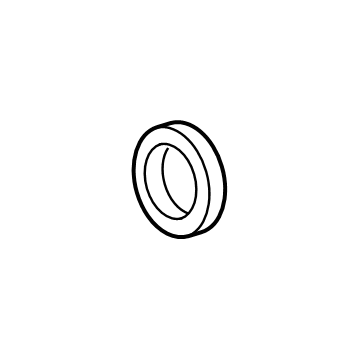
2010 Scion xD Rear Main Seal
Part Number: 90311-A0013$49.22 MSRP: $68.51You Save: $19.29 (29%)Ships in 1 Business DayProduct Specifications- Other Name: Seal, Type T Oil; Engine Crankshaft Seal, Rear; Seal, Engine Rear Oil; Engine Crankshaft Seal; Crankshaft Seal
- Manufacturer Note: (L)
- Replaces: 90311-76002
- Part Name Code: 11401L
- Item Weight: 0.50 Pounds
- Item Dimensions: 5.0 x 5.2 x 0.4 inches
- Condition: New
- Fitment Type: Direct Replacement
- SKU: 90311-A0013
- Warranty: This genuine part is guaranteed by Toyota's factory warranty.
2010 Scion xD Crankshaft Seal
Looking for affordable OEM 2010 Scion xD Crankshaft Seal? Explore our comprehensive catalogue of genuine 2010 Scion xD Crankshaft Seal. All our parts are covered by the manufacturer's warranty. Plus, our straightforward return policy and speedy delivery service ensure an unparalleled shopping experience. We look forward to your visit!
2010 Scion xD Crankshaft Seal Parts Q&A
- Q: How to remove the Crankshaft Seal on 2010 Scion xD?A: A 2ZR-FE engine needs engine fuel pressure discharge as the first step to remove its Crankshaft Main Bearing Seal. The repair process begins by discarding the battery and its tray along with the front wheels and engine under hood covers from both left and right sides. Engine coolant should be drained together with manual and automatic transaxle oils when applicable. The technician needs to remove the front wiper arm head cap followed by both front wiper arm and blade assemblies (LH and RH) along with hood to cowl top seal cowl top ventilator louver sub-assembly and left and right cowl top ventilator louvers. The service requires removing the front wiper motor and link together with front air shutter seal (RH) and outer cowl top panel followed by air cleaner assembly and air cleaner bracket then battery carrier and No. 2 cylinder head cover. Next steps include the removal of fan & generator V belt and No. 2 radiator hose then separating front bumper cover and disconnecting No. 1 radiator hose and No. 1 oil cooler outlet hose as well as No. 2 oil cooler inlet hose (for automatic transaxle). The service procedure begins with extracting the hood lock assembly and No. 1 cooler cover, upper radiator support absorber, and upper radiator support sub-assembly and radiator assembly. To complete engine dismantling remove the pulley compressor assembly, transmission control cable assembly (for automatic and manual transaxles), union to check valve hose, No. 1 fuel vapor feed hose, engine wire and two heater water hose connections with labels A and inlet A and the fuel tube sub-assembly. The technician should remove the clutch release cylinder assembly (for manual transaxle) and column hole cover silencer sheet, steering sliding yoke sub-assembly, No. 1 steering column hole cover sub-assembly, shift lever knob sub-assembly (for manual transaxle), console panel upper, console box cover rear, console box carpet, rear console box assembly, front console box, front floor brace center, front exhaust pipe assembly, front axle shaft LH nut, and front axle shaft RH nut. The service requires disconnection of speed sensors along with tie rod ends (LH and RH, front) and front stabilizer links (LH and RH) and front lower suspension arms (LH and RH) with their associated front axle assemblies (LH and RH). Erase the front drive shaft assemblies (LH and RH) and (for automatic transaxle) discard the flywheel housing under cover and drive plate with torque converter clutch setting bolt. The service professional must detach the transmission oil level gauge sub-assembly (for automatic transaxle) while separating the transmission oil filler tube sub-assembly (for automatic transaxle) before extracting the automatic transaxle assembly (for automatic transaxle). The service process requires removal of the No. 1 transmission control cable bracket alongside manual transaxle assembly, clutch cover assembly, clutch disc assembly, drive plate and ring gear sub-assembly (for automatic transaxle) and flywheel sub-assembly (for manual transaxle). The engine rear oil seal can be removed by first cutting off the oil seal lip then using a screwdriver to extract it. Smooth crankshaft damage areas with 400-grit sandpaper before checking for shaft damage.
Related 2010 Scion xD Parts
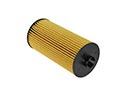 2010 Scion xD Oil Filter
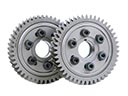 2010 Scion xD Cam Gear
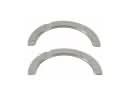 2010 Scion xD Crankshaft Thrust Washer Set
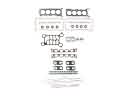 2010 Scion xD Cylinder Head Gasket
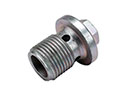 2010 Scion xD Drain Plug
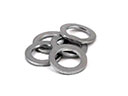 2010 Scion xD Drain Plug Washer
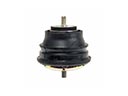 2010 Scion xD Engine Mount
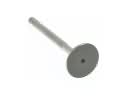 2010 Scion xD Exhaust Valve
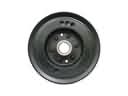 2010 Scion xD Harmonic Balancer
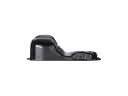 2010 Scion xD Oil Pan
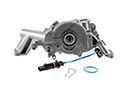 2010 Scion xD Oil Pump
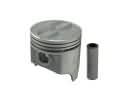 2010 Scion xD Piston