×
ToyotaParts- Hello
- Login or Register
- Quick Links
- Live Chat
- Track Order
- Parts Availability
- RMA
- Help Center
- Contact Us
- Shop for
- Toyota Parts
- Scion Parts
My Garage
My Account
Cart
OEM 2000 Toyota Corolla Axle Shaft
Car Axle Shaft- Select Vehicle by Model
- Select Vehicle by VIN
Select Vehicle by Model
orMake
Model
Year
Select Vehicle by VIN
For the most accurate results, select vehicle by your VIN (Vehicle Identification Number).
4 Axle Shafts found
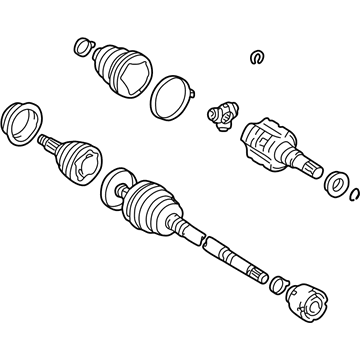
2000 Toyota Corolla Axle Assembly, Passenger Side
Part Number: 43410-02091$468.34 MSRP: $686.36You Save: $218.02 (32%)Ships in 1-3 Business DaysProduct Specifications- Other Name: Shaft Assembly, Front Drive; CV Axle Assembly, Front Right; GSP Cv Axle; Axle Shaft; Shaft Assembly, Front Drive, Passenger Side; CV Axle Assembly
- Position: Passenger Side
- Part Name Code: 43410
- Item Weight: 14.90 Pounds
- Item Dimensions: 29.8 x 7.4 x 6.4 inches
- Condition: New
- Fitment Type: Direct Replacement
- SKU: 43410-02091
- Warranty: This genuine part is guaranteed by Toyota's factory warranty.
- Product Specifications
- Other Name: Shaft Assembly, Front Drive; CV Axle Assembly, Front Left; GSP Cv Axle; Axle Shaft; Shaft Assembly, Front Drive, Driver Side; CV Axle Assembly
- Position: Driver Side
- Part Name Code: 43420
- Item Weight: 14.10 Pounds
- Item Dimensions: 29.2 x 7.5 x 6.4 inches
- Condition: New
- Fitment Type: Direct Replacement
- SKU: 43420-02091
- Warranty: This genuine part is guaranteed by Toyota's factory warranty.
- Product Specifications
- Other Name: Shaft Assembly, Front Drive; CV Axle Assembly, Front Left; GSP Cv Axle; Axle Shaft; Shaft Assembly, Front Drive, Driver Side; CV Axle Assembly
- Manufacturer Note: W(ABS)
- Position: Driver Side
- Part Name Code: 43420
- Item Weight: 15.20 Pounds
- Item Dimensions: 30.1 x 7.4 x 6.4 inches
- Condition: New
- Fitment Type: Direct Replacement
- SKU: 43420-02101
- Warranty: This genuine part is guaranteed by Toyota's factory warranty.
- Product Specifications
- Other Name: Shaft Assembly, Front Drive; CV Axle Assembly, Front Right; GSP Cv Axle; Axle Shaft; Shaft Assembly, Front Drive, Passenger Side; CV Axle Assembly
- Manufacturer Note: W(ABS)
- Position: Passenger Side
- Part Name Code: 43410
- Item Weight: 14.50 Pounds
- Item Dimensions: 29.5 x 7.3 x 6.7 inches
- Condition: New
- Fitment Type: Direct Replacement
- SKU: 43410-02101
- Warranty: This genuine part is guaranteed by Toyota's factory warranty.
2000 Toyota Corolla Axle Shaft
Looking for affordable OEM 2000 Toyota Corolla Axle Shaft? Explore our comprehensive catalogue of genuine 2000 Toyota Corolla Axle Shaft. All our parts are covered by the manufacturer's warranty. Plus, our straightforward return policy and speedy delivery service ensure an unparalleled shopping experience. We look forward to your visit!
2000 Toyota Corolla Axle Shaft Parts Q&A
- Q: How to remove and install the axle shaft while ensuring proper care for the hub bearing and ABS speed sensor on 2000 Toyota Corolla?A: You must first use Special Service Tool: 09608-16042 (09608-02021, 09608-02041) to support the hub bearing when the vehicle weight rests on it. When working on ABS-equipped vehicles users should protect the ABS speed sensor rotor serration located on the drive shaft from any damage upon hub axle separation. Start by draining the gear oil (M/T) or ATF (A/T) while you remove engine under covers and front wheel and drive shaft lock nut. Loosen the drive shaft lock nut by removing both the locking cap and cotter key then apply vehicle brakes before unlocking the nut. Remove the steering knuckle tie rod end through the maintenance tool: 09628-62011 before taking out the lower suspension arm's bolt and both nuts from the lower ball joint. A plastic hammer should be used to separate the drive shaft from the axle hub but careful attention must be paid to avoid damaging both the boot and the ABS speed sensor rotor. The left-hand drive shaft can be uninstalled from the transaxle by using a hub nut wrench and hammer while you protect the dust cover and oil seal from damage. Use the hub nut wrench on the right-hand drive shaft but maintain caution when removing both the dust cover and oil seal while conducting the operation. A screwdriver helps in removing the snap ring that protects the inboard joint shaft. Begin installation by installing a fresh snap ring onto the inboard joint shaft then apply gear oil to the inboard joint shaft along with the differential case sliding surface followed by an orientation of the snap ring opening facing downward. Install the drive shaft through hammering a brass bar following two to three millimeters (0.08 to 0.12 inches) of axial movement while making sure the drive shaft keeps itself in place after the brass bar is removed. When attaching the drive shaft to the axle hub maintain boot and ABS speed sensor rotor integrity. You should install the lower suspension arm to lower ball joint with 142 Nm (1,450 kgf.cm, 105 ft. lbs.) torque while installing the tie rod end to steering knuckle with a new nut and cotter pin followed by nut tightening up to 60 degrees if required using 49 Nm (500 kgf.cm, 36 ft. lbs.) torque. Set the brakes for installing the drive shaft lock nut at 225 Nm (2,300 kgf.cm, 166 ft. lbs.) and place the lock cap along with a new cotter pin before tightening the nut to 60 degrees. After check and filig of M/T gear oil or A/T fluid you should install engine covers and front wheels under torque specifications of 103 Nm (1,050 kgf.cm, 76 ft. lbs.). The last step should include checking both front wheel alignment and ABS speed sensor signal diagnostics.
Related 2000 Toyota Corolla Parts
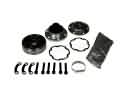 2000 Toyota Corolla CV Joint
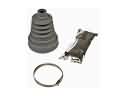 2000 Toyota Corolla CV Boot
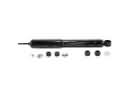 2000 Toyota Corolla Shock Absorber
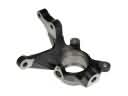 2000 Toyota Corolla Steering Knuckle
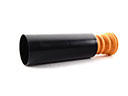 2000 Toyota Corolla Bump Stop
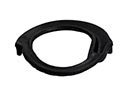 2000 Toyota Corolla Coil Spring Insulator
 2000 Toyota Corolla Lateral Link
 2000 Toyota Corolla Rear Crossmember
 2000 Toyota Corolla Shock And Strut Mount
 2000 Toyota Corolla Suspension Strut Rod
 2000 Toyota Corolla Sway Bar Bracket
 2000 Toyota Corolla Sway Bar Kit