×
ToyotaParts- Hello
- Login or Register
- Quick Links
- Live Chat
- Track Order
- Parts Availability
- RMA
- Help Center
- Contact Us
- Shop for
- Toyota Parts
- Scion Parts
My Garage
My Account
Cart
OEM 2000 Toyota Celica Rack And Pinion
Steering Rack And Pinion- Select Vehicle by Model
- Select Vehicle by VIN
Select Vehicle by Model
orMake
Model
Year
Select Vehicle by VIN
For the most accurate results, select vehicle by your VIN (Vehicle Identification Number).
2 Rack And Pinions found
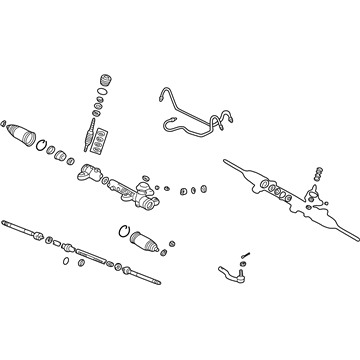
 Product Specifications
- Other Name: Link Assembly, Power Steering; Rack and Pinion Assembly; Steering Gearbox; Gear Assembly; Gear Assembly, Power Steering(For Rack & Pinion)
- Replaces: 44200-20880, 44200-29025
- Part Name Code: 44250
- Item Weight: 22.10 Pounds
- Item Dimensions: 50.7 x 10.5 x 6.7 inches
- Condition: New
- Fitment Type: Direct Replacement
- SKU: 44200-20881
- Warranty: This genuine part is guaranteed by Toyota's factory warranty.
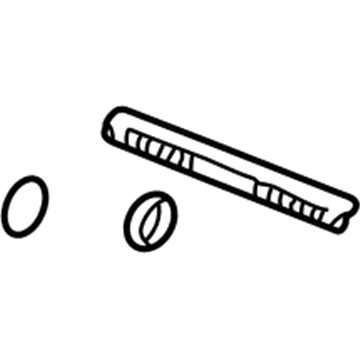 Product Specifications
- Other Name: Rack Sub-Assembly, Power; Rack And Pinion Rack Gear, Front; Steering Gearbox; Steering Rack; Rack; Rack Sub-Assembly, Power Steering
- Position: Front
- Part Name Code: 44204
- Item Weight: 5.50 Pounds
- Item Dimensions: 32.4 x 3.1 x 2.8 inches
- Condition: New
- Fitment Type: Direct Replacement
- SKU: 44204-20400
- Warranty: This genuine part is guaranteed by Toyota's factory warranty.
2000 Toyota Celica Rack And Pinion
Looking for affordable OEM 2000 Toyota Celica Rack And Pinion? Explore our comprehensive catalogue of genuine 2000 Toyota Celica Rack And Pinion. All our parts are covered by the manufacturer's warranty. Plus, our straightforward return policy and speedy delivery service ensure an unparalleled shopping experience. We look forward to your visit!
2000 Toyota Celica Rack And Pinion Parts Q&A
- Q: How to remove and install the Rack And Pinion on 2000 Toyota Celica?A: Align the front wheels in a straight position followed by pad removal of steering wheel and steering wheel itself. Begin by removing engine under covers on all three sides of the vehicle before disconnecting tie rod ends and No. 2 intermediate shaft assembly. Special Service Tool: 09631-22020 helps users disconnect the pressure feed and return tubes while a bolt must be removed to release the tube clamp. The technician must uninstall the engine hood and detach the column hole cover sub-assembly. The engine sling device installation requires you to attach it to the hangers by removing four bolts from the engine hangers, the No. 2 cylinder head cover, and disconnecting the PCV hoses. Fitting together the No. 1 and No. 2 engine hangers with part numbers 12281-22021, 12281-15040 or 12281-15050, and 9115112-131016 should be done while maintaining proper orientation before torquing each installation to 38 Nm (388 kgf.cm, 28 ft. lbs.) for both engines. Hanger the engine sling device on the struts but avoid suspending the motor through any other section. Fully detach the lower ball joint from the lower suspension arm and separate the stabilizer bar by unplugging the nut then proceed to the opposite side. You must disconnect the engine rear mount insulator and front suspension member through bolt A and 3 nuts and then disconnect the engine front mount insulator and front suspension member through the removal of 2 bolts (bolt B). Through transmission jack support of the front suspension member and lower suspension arm assembly take out all six bolts that hold the C, D, and E components. Remove first a Rack And Pinion assembly by unbolting four hardware components while matching positions between intermediate extension and control valve shaft then extract bolt and intermediate extension. Installation begins with attaching the engine rear mount insulator using 87 Nm (890 kgf.cm, 64 ft. lbs.) torque on the through-bolt while securing the engine rear mount bracket using 64 Nm (655 kgf.cm, 47 ft. lbs.) torque when installing the 3 mounting bolts. To install the Rack And Pinion assembly first align the matchmarks then install the bolt at 35 Nm (360 kgf.cm, 26 ft. lbs.) in addition to securing the 4 bolts to the front suspension member with 58 Nm (591 kgf.cm, 43 ft. lbs.). Attach the front suspension member that includes the lower suspension arm and Rack And Pinion assembly with 6 fasteners according to these specifications: Bolt C and D require 157 Nm of torque (1,600 kgf.cm or 116 ft. lbs.) and Bolt E needs 39 Nm of torque (400 kgf.cm or 29 ft. lbs.). The sequence of installation includes first using 2 bolts (bolt B) to connect the engine front mount insulator to the front suspension member at 52 Nm (530 kgf.cm, 38 ft. lbs.) then proceeding to link the engine rear mount insulator to the front suspension member with bolt A and 3 nuts at equivalent torque values. The installation of the stabilizer bar ends with the nut should reach 44 Nm (449 kgf.cm, 32 ft. lbs.), and the process should be repeated on the opposite side. The work includes reconnecting the lower ball joint to lower suspension arm followed by engine sling device disengagement then reconnecting PCV hoses before installing the No. 2 cylinder head cover with 4 bolts. Fitting the engine hood requires connecting the column hole cover sub-assembly which must be fastened with tube clamp bolt tightened to 7.8 Nm (80 kgf.cm, 69 inch lbs.). Use Special Service Tool: 09631-22020 to reattach pressure feed and return tubes with a torque of 37 Nm (375 kgf.cm, 27 ft. lbs.) when employing a 345 mm (13.58 inch) torque wrench fulcrum length. The service technician installs the No. 2 intermediate shaft assembly and both RH and LH tie rod ends followed by installation of the RH, center, and LH engine under covers. Complete front wheel alignment by centering the spiral cable, installing the steering wheel while matching marks, tightening the wheel nut temporarily, draining fluid from the power steering system, checking wheel position and torqueing the wheel nut to 34 Nm (350 kgf.cm, 25 ft. lbs.) before adding the steering wheel pad.
Related 2000 Toyota Celica Parts
 2000 Toyota Celica Steering Wheel
 2000 Toyota Celica Ignition Switch
 2000 Toyota Celica Power Steering Pump
 2000 Toyota Celica Power Steering Hose
 2000 Toyota Celica Drag Link
 2000 Toyota Celica Power Steering Control Valve
 2000 Toyota Celica Power Steering Reservoir
 2000 Toyota Celica Rack and Pinion Boot
 2000 Toyota Celica Steering Gear Box
 2000 Toyota Celica Steering Shaft
 2000 Toyota Celica Tie Rod End
 2000 Toyota Celica Wiper Switch