×
ToyotaParts- Hello
- Login or Register
- Quick Links
- Live Chat
- Track Order
- Parts Availability
- RMA
- Help Center
- Contact Us
- Shop for
- Toyota Parts
- Scion Parts
My Garage
My Account
Cart
OEM Toyota Bellhousing
Bell Housing- Select Vehicle by Model
- Select Vehicle by VIN
Select Vehicle by Model
orMake
Model
Year
Select Vehicle by VIN
For the most accurate results, select vehicle by your VIN (Vehicle Identification Number).
5 Bellhousings found
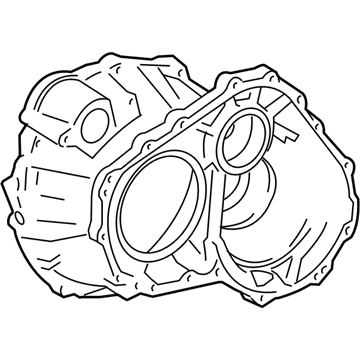
Toyota Axle Carrier, Front Part Number: 35105-48023
$1480.60 MSRP: $2169.83You Save: $689.23 (32%)Ships in 1-3 Business DaysProduct Specifications- Other Name: Housing Sub-Assembly, Transfer Extension; Differential Carrier Assembly, Front; Housing, Transaxle
- Position: Front
- Replaces: 35105-08011, 35105-08010, 35105-08012
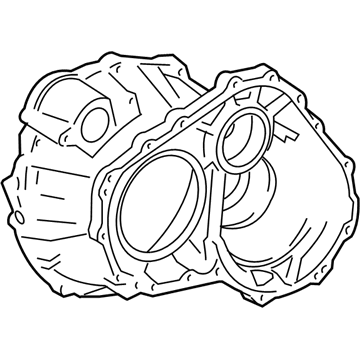
Toyota Axle Carrier, Front Part Number: 35105-08031
$1522.43 MSRP: $2231.15You Save: $708.72 (32%)Ships in 1-3 Business DaysProduct Specifications- Other Name: Housing Sub-Assembly, Transfer Extension; Differential Housing, Front; Housing, Transaxle
- Manufacturer Note: TRANSAXLE NO.=3XXXXX
- Position: Front
Toyota Axle Carrier Part Number: 35105-28062
$1589.78 MSRP: $2329.85You Save: $740.07 (32%)Ships in 1-3 Business DaysProduct Specifications- Other Name: Housing Sub-Assembly, Transfer Extension
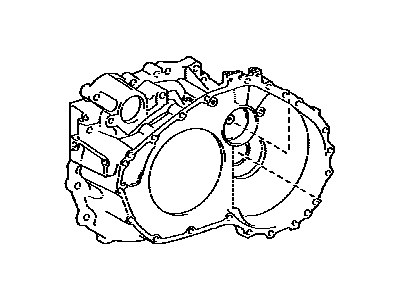
Toyota Housing, Transaxle Part Number: 35105-48121
$1403.98 MSRP: $2057.55You Save: $653.57 (32%)Ships in 1-3 Business DaysProduct Specifications- Other Name: Housing Sub-Assembly, Transfer Extension
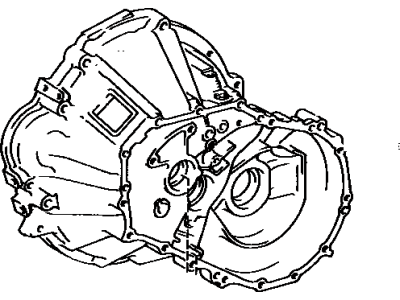
Toyota Carrier Part Number: 31105-16012
Product Specifications- Other Name: Case Sub-Assembly, Transmission; Case Sub-Assembly, Transaxle(MTM)
Toyota Bellhousing
OEM parts deliver unmatched quality you can rely on. They pass extensive quality control inspections. Toyota produces them to the official factory specifications. This process helps prevent defects and imperfections. So you can get exceptional lifespan and a flawless fit. Need new OEM Toyota Bellhousing? You'll love our wide selection of genuine options. Shop in minutes and skip the hunt. Our prices are unbeatable, you'll save time and money. It's easy to shop and find the right piece. Our committed customer service team gives professional help from start to finish. Every part includes a manufacturer's warranty. We ship quickly, your parts will arrive fast at your door.
Toyota Bellhousing channels pass the engine torque to the gearbox but protect the clutch and maintain it in perfect alignment, which makes it an essential component of all performance driven Toyota drive train. Toyota made global news by combining effective hybrid power with unshakable durability, which is revealed in the TNGA platform that focuses on the handling sharpness, the refinements of the Hybrid Synergy Drive in the Prius, and the 2024 RAV4 Plug-in Hybrid that extends the electric range to 42 miles. Such drivers as that Toyota cars use less fuel, last longer, and provide quick and confident responses, which was created due to an approach of continuous improvement in production. A Bellhousing is a hardheaded metallic shell that connects engine and transmission and protects the clutch or the torque converter and also ensures that the input shaft is in the middle of everything. Installation of a Toyota Bellhousing would require checking to ensure that the unit fits your engine and your transmission, followed by cleaning of gasket faces and dowel pins and threads. Install a clutch, release fork and pilot bearing, securing the parts with alignment tools. Install the Bellhousing onto the dowels, then begin all the bolts by hand then tighten them in a crisscross pattern until they reach factory tight. Make sure the input shaft rotates freely, screw the transmission onto it, put the starter and dust covers, connect the hydraulic or cable linkage and test the pedal pressing the pedal a few times to make sure it engages smooth.