×
ToyotaParts- Hello
- Login or Register
- Quick Links
- Live Chat
- Track Order
- Parts Availability
- RMA
- Help Center
- Contact Us
- Shop for
- Toyota Parts
- Scion Parts
My Garage
My Account
Cart
OEM Toyota Land Cruiser Cylinder Head
Head- Select Vehicle by Model
- Select Vehicle by VIN
Select Vehicle by Model
orMake
Model
Year
Select Vehicle by VIN
For the most accurate results, select vehicle by your VIN (Vehicle Identification Number).
14 Cylinder Heads found
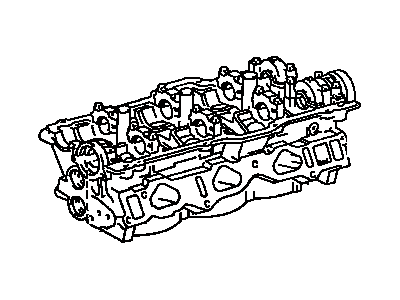
Toyota Land Cruiser Head Sub-Assembly, Cylinder Part Number: 11101-59166
$690.01 MSRP: $860.00You Save: $169.99 (20%)
Toyota Land Cruiser Head Sub-Assembly, Cylinder Part Number: 11101-29715
$864.15 MSRP: $1077.04You Save: $212.89 (20%)Ships in 1-2 Business DaysToyota Land Cruiser Cylinder Head Part Number: 11101-59167
$869.99 MSRP: $1084.31You Save: $214.32 (20%)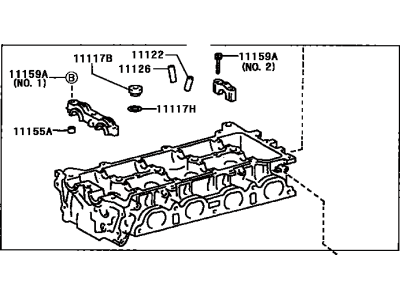
Toyota Land Cruiser Cylinder Head Part Number: 11101-38H20
$1089.93 MSRP: $1358.42You Save: $268.49 (20%)Ships in 1-3 Business Days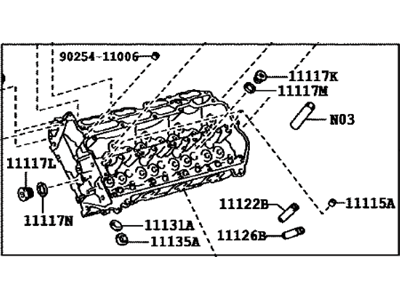
Toyota Land Cruiser Head Sub-Assembly, Cylinder Part Number: 11102-38H20
$1090.38 MSRP: $1359.00You Save: $268.62 (20%)Ships in 1-3 Business Days
Toyota Land Cruiser Cylinder Head, Driver Side Part Number: 11102-39335
$1157.35 MSRP: $1442.45You Save: $285.10 (20%)Ships in 1-3 Business DaysToyota Land Cruiser Head Sub-Assembly, Cylinder Part Number: 11101-80003
$1157.35 MSRP: $1442.45You Save: $285.10 (20%)Ships in 1-3 Business Days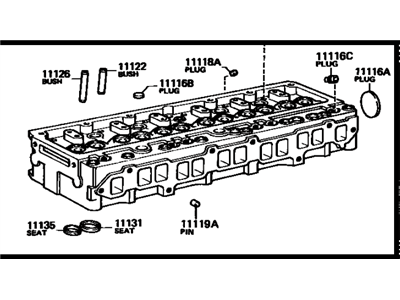
Toyota Land Cruiser Head Sub-Assembly, Cylinder Part Number: 11101-69107
$1657.09 MSRP: $2065.31You Save: $408.22 (20%)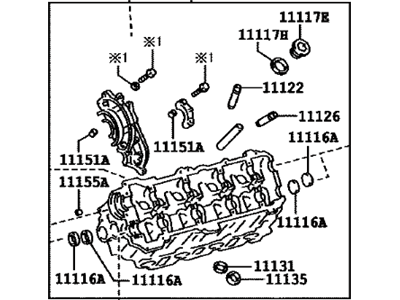
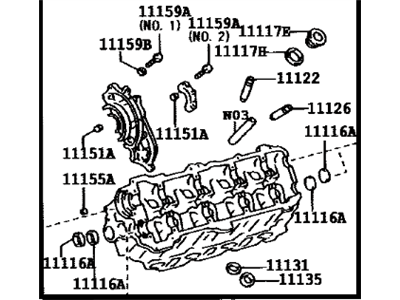
Toyota Land Cruiser Cylinder Head, Driver Side Part Number: 11102-59105
$802.42 MSRP: $1000.09You Save: $197.67 (20%)
Toyota Land Cruiser Cylinder Head Part Number: 11101-61080
Toyota Land Cruiser Cylinder Head Part Number: 11101-61040
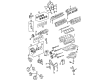
Toyota Land Cruiser Cylinder Head
Choose genuine Cylinder Head that pass strict quality control tests. You can trust the top quality and lasting durability. Shopping for OEM Cylinder Head for your Toyota Land Cruiser? Our website is your one-stop destination. We stock an extensive selection of genuine Toyota Land Cruiser parts. The price is affordable so you can save more. It only takes minutes to browse and find the exact fit. Easily add to cart and check out fast. Our hassle-free return policy will keep you stress-free. We process orders quickly for swift delivery. Your parts will arrive faster, so you can get back on the road sooner.
The Toyota Land Cruiser is a legend in the SUV industry, but the key to its off-road success lies within its heart, the Toyota Cylinder Head which, with its heavy ladder frame, full-time four-wheel drive, high ground clearance, and interior that is viewed as comfortable yet work-ready, makes the Toyota Land Cruiser a favorite in deserts, mountains, and city streets. Owners believe in the Toyota tradition of engineering that allows the Land Cruiser to last decades, with convenient parts support and uncomplicated maintenance practices that help the adventurers concentrate on the drive and not on fixing the car. As the car surges over rugged terrain, the engine is propelled by its accuracy cast head that seals the combustion chambers and airflow and transports coolant and oil that enables efficient power delivery and stable temperatures even on slow rocky roads. This head has valves and ports that aim at optimal breathing in such a way the engine gives out smooth torque at low rpm and quick reaction upon highways, reflecting that Toyota have put in everything in terms of ensuring a balanced performance and longevity. Durability of the Cylinder Head is enhanced by strong head bolts and a good quality gasket that ensures that the Cylinder Head is firmly attached to the block thus eliminating leakages that would otherwise cut short Land Cruiser adventures. Installation of the Cylinder Head will include cleaning the surfaces, placing the new gasket, setting the head on dowels, tightening bolts in phases, reassembling timing components, filling up fluids, and finally, starting the engine checking the leaks.
Related Toyota Land Cruiser Parts
 Toyota Land Cruiser Camshaft Bearing
 Toyota Land Cruiser Cylinder Head Gasket
 Toyota Land Cruiser Dipstick
 Toyota Land Cruiser Engine Cover
 Toyota Land Cruiser Engine Mount
 Toyota Land Cruiser Engine Oil Cooler
 Toyota Land Cruiser Oil Drain Plug Gasket
 Toyota Land Cruiser Oil Pan Gasket
 Toyota Land Cruiser Piston
 Toyota Land Cruiser Timing Chain Tensioner
 Toyota Land Cruiser Timing Cover
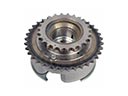 Toyota Land Cruiser Variable Timing Sprocket