×
ToyotaParts- Hello
- Login or Register
- Quick Links
- Live Chat
- Track Order
- Parts Availability
- RMA
- Help Center
- Contact Us
- Shop for
- Toyota Parts
- Scion Parts
My Garage
My Account
Cart
OEM Toyota bZ4X Overload Relay
Overcurrent Relay- Select Vehicle by Model
- Select Vehicle by VIN
Select Vehicle by Model
orMake
Model
Year
Select Vehicle by VIN
For the most accurate results, select vehicle by your VIN (Vehicle Identification Number).
3 Overload Relays found
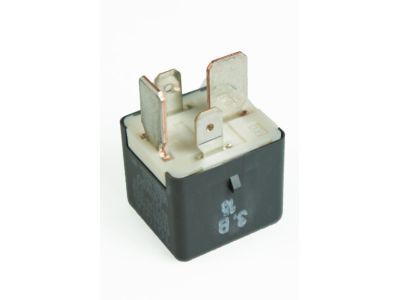
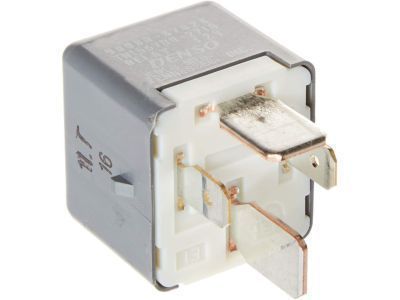

Toyota bZ4X Fan Relay Part Number: 90080-87024
$69.90 MSRP: $98.12You Save: $28.22 (29%)Ships in 1-3 Business Days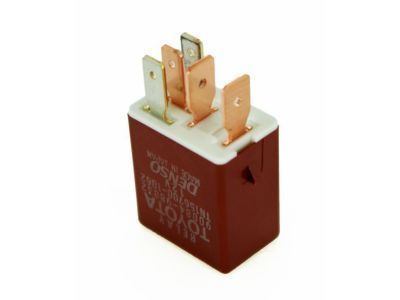
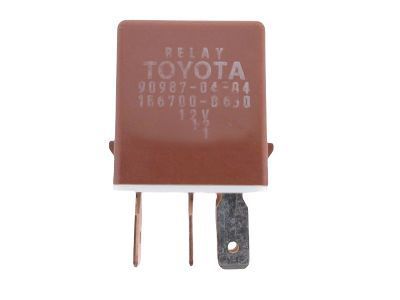
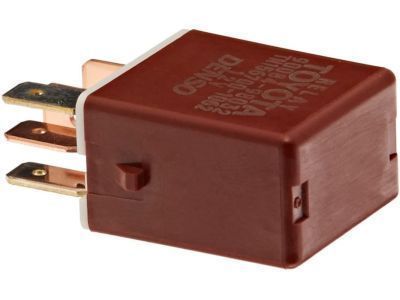
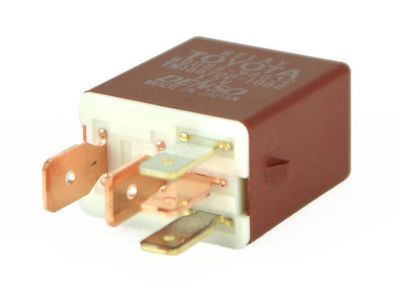

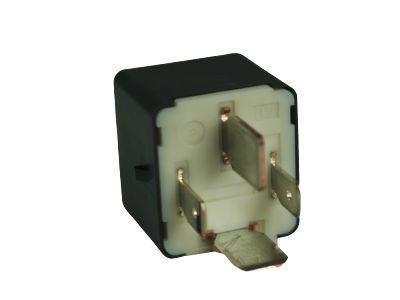
Toyota bZ4X Fuel Pump Relay Part Number: 90084-98032
$59.74 MSRP: $83.15You Save: $23.41 (29%)Ships in 1-3 Business Days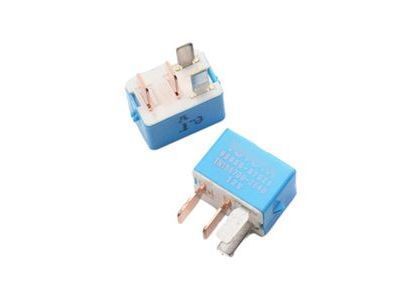
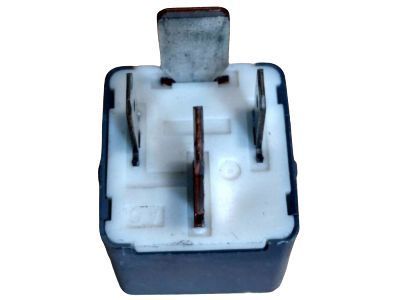
Toyota bZ4X Horn Relay Part Number: 90080-87026
$23.53 MSRP: $32.75You Save: $9.22 (29%)
Toyota bZ4X Overload Relay
Choose genuine Overload Relay that pass strict quality control tests. You can trust the top quality and lasting durability. Shopping for OEM Overload Relay for your Toyota bZ4X? Our website is your one-stop destination. We stock an extensive selection of genuine Toyota bZ4X parts. The price is affordable so you can save more. It only takes minutes to browse and find the exact fit. Easily add to cart and check out fast. Our hassle-free return policy will keep you stress-free. We process orders quickly for swift delivery. Your parts will arrive faster, so you can get back on the road sooner.
Toyota bZ4X Overload Relay safeguards the circuit of the electric motor by detecting over-current and cutting off power before the heat can damage the important part. The Overload Relay is adjacent to the power inverter and its heat sensitive element bends when it gets hot pushing the contacts apart and halting the flow after cooling it down, then the bZ4X proceeds to drive again, thus similar to a watchful fuse that will automatically recover. Stable housing is resistant to vibration and moisture, rapid response time ensures the safety of copper windings, and clear labels can be easily diagnosed, which makes this Overload Relay a small component with a big security task. The Toyota bZ4X itself is impressive with quiet, dual motor all wheel drive, 214 horsepower provides the car with quick acceleration, and low center of gravity provided by e TNGA chassis provides sharp cornering. A 71.4 kWh lithium ion pack delivers a range of up to 252 miles and regenerative braking recharges itself each time the car slows down to increase the range. There is a large touchscreen, panoramic roof and vegan friendly interior which form a modern cabin, but Toyota pricing is affordable. Remote updates are added and visited without modifications, and the trustful battery warranty demonstrates the Toyota trust in the bZ4X platform. Installation requires high voltage and 12 volt sources to be disconnected, the new Overload Relay to be mounted next to the contactor, the terminals to be tightened, and power to be restored followed by a test run.
Related Toyota bZ4X Parts
 Toyota bZ4X ABS Relay
 Toyota bZ4X Body Control Module
 Toyota bZ4X Car Battery
 Toyota bZ4X Cooling Fan Relay
 Toyota bZ4X Fuel Pump Relay
 Toyota bZ4X Fuse
 Toyota bZ4X Headlight Switch
 Toyota bZ4X Horn Relay
 Toyota bZ4X Radiator Fan Relay
 Toyota bZ4X Relay
 Toyota bZ4X Ride Height Sensor
 Toyota bZ4X Speedometer